


Freswick and the Last Great Viking
Trapped inside Lambaborg by Earl Rognvald’s men and running out of food, Sweyn Asleifsson has only one way out. Under cover of darkness, he lowers himself down the Caithness cliffs by rope and escapes in a hidden boat.
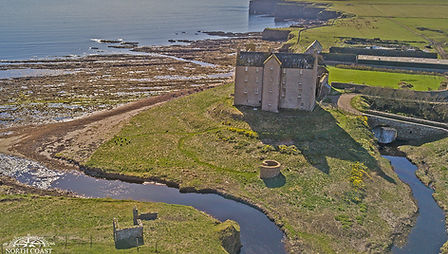
Freswick Bay is a peaceful place today, but beneath the grass and drifting sand lies evidence of one of the most important Norse settlements discovered on the Scottish mainland. Archaeologists have uncovered the remains of buildings, middens and working areas occupied during the later Norse period. Pottery, combs, metal objects and animal remains help us picture a community that farms the surrounding land, keeps livestock, works iron and maintains close connections with the sea. The most remarkable discovery is the enormous quantity of fish remains. Fishing here is not merely a way of feeding local families. It is organised on a large scale, probably producing dried fish for trade and export.
This is the world of Sweyn Asleifsson, one of the most colourful and dangerous figures in the Orkneyinga Saga. Sweyn is a landowner, political operator, warrior and pirate. His year follows an extraordinary rhythm. In spring he supervises the sowing of his crops. He then takes his ships south on a season of raiding. He returns for the harvest before setting out again on what the saga calls his Autumn Viking expedition. The wealth of Freswick helps make that life possible. While Sweyn is at sea, people remain here tending animals, cultivating barley, repairing equipment and processing immense quantities of fish. The settlement is the dependable economic heart behind the violence and adventure recorded in the saga.
Close to the bay stands another part of the story. The dramatic promontory now occupied by the ruins of Bucholie Castle is traditionally identified as Lambaborg, Sweyn’s coastal fortress. The later castle is medieval, but the narrow headland forms a natural stronghold, protected by cliffs and approached across a confined neck of land. According to the saga, Earl Rognvald attacks Sweyn there following a dispute over the division of plunder. The stronghold cannot easily be stormed, so the earl settles down to starve its defenders into submission. Sweyn’s provisions begin to fail, but surrender is not part of his character. Under cover of darkness, he and a companion lower themselves down the cliff using ropes. They reach a boat hidden below the fortress and quietly row away while Rognvald’s men continue watching the landward entrance.
By morning, the trap remains closed, but its most important prisoner has vanished. Freswick therefore gives us something unusual. Archaeology shows us the ordinary people, the houses, the animals, the workshops and the fish processing that supported Norse life. The saga gives us Sweyn, the ships, the feuds and the escape down the cliff. Together, they turn this quiet Caithness bay into the living centre of a Viking world.